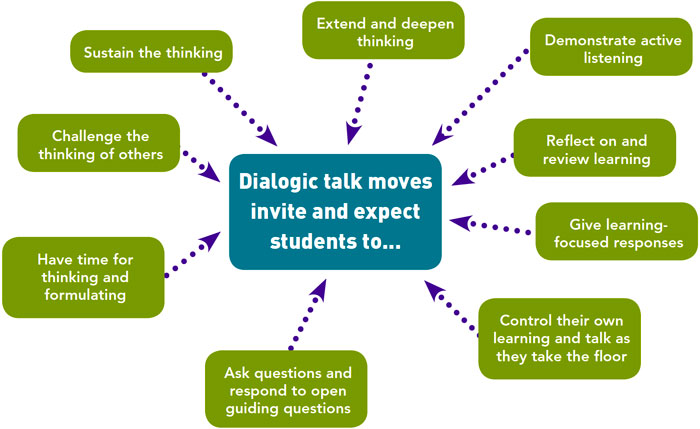
Figure 1: Nine dialogic talk practices (adapted from Edwards-Groves, Anstey & Bull, 2014)
As we know, different types of classroom talk practices do different kinds of pedagogical work; and since not all talk sustains and extends learning, teachers need to consider which academic purposes and instructional goals the talk serves to meet (at the time). The types of talk moves that lead to dialogue work in concert with each other to engage students in productive and substantive learning-focused conversations promote student learning in two ways.
- Directly — through access to ideas, and relationship between ideas, strategies, procedures, facts, history, and more
- Indirectly — through the building of a ‘supportive’ social environment and a culture of learning, talking and listening for learning (Anderson et al, 2011).
Sustaining the thinking
This talk move invites students to ‘say more’ or to ‘give evidence’ or to ‘state reasons’.
A teacher ‘sustaining the line of questioning’ offers students a more sustained turn to share, explore and deepen their own ideas further and to build onto, elaborate and communicate their own line of thought.
It offers individual students an extended time to engage in a more substantive conversation with the teacher before the floor is opened to the rest of the class. Sustaining the question provides valuable time for students to:
- ‘say more’, ‘dig deep’ and ‘go further’
- deepen thinking
- rehearse ideas
- test out assumptions publicly.
It aims to develop both reasoning and evidentiary talk and the ability to communicate those reasons (O’Connor & Michaels, 1996). It enables students to build on half formed ideas as the teacher presses them to provide reasons to substantiate their points as demonstrated by the questions in italics in Example 2.
Example 2
| Teacher: |
Ryan, you raised an interesting point there about what makes a sustainable rainforest. Can you say more about that? |
| Ryan: |
So like, um it is important for the wildlife that there is not too much logging so that the forests stay healthy for the future; that’s what sustainable sort of means.
|
| Teacher: |
Why Ryan? Can you go a bit further with that idea about what sustainable means for us? |
| Ryan: |
Well it is about helping the earth stay healthy. People can all help; it’s the small little things that add up in the end, like protecting the trees in the rainforest environment so that the animals that live there don’t go extinct. |
| Teacher: |
Protecting the environment, good point. Where did you get that idea? Do you have some evidence to back up that idea? |
Extending and deepening thinking
This talk move invites other students to ‘add on’ or to ‘go further’.
Opening up the floor to other students invites (and expects) them to add on to the ideas and opinions of others and to explore concepts more deeply as a class group. Students are:
- pressed to extend the thinking of others to add more
- provide more depth and detail to tell more about an idea
- present additional evidence to endorse the knowledge or facts being presented to add some evidence
- to substantiate thoughts, claims and opinions
- to clarify the responses of other students.
This move leads students to provide evidentiary talk that builds a stronger foundation for developing and securing knowledge and deepening reasoning when exploring complex ideas or difficult concepts. Notice how the teacher questions do this in Example 3.
Example 3
| Teacher: |
Okay, okay, Ryan provided some very technical information to support his idea. Does anyone have something else to add to that? Yes Joelle. |
| Joelle: |
Well I also think like, the plants, it’s not for just the animals there, for shelter, their habitat you know. You need to think green, my dad says that. The plants//
|
| Jeremy: |
//Flora |
| Joelle: |
Flora, yes that’s right, needs to stay healthy to supply oxygen from trees and food as well as shelter. |
| Teacher: |
Oh right, your dad works for LandCare doesn’t he? He is a good source of information. So you also mentioned some other important things there; shelter, oxygen. Can anyone else have another point? Who can add? |
Challenging thinking
This talk move invites students to respectfully ‘question others’ and to ‘challenge the point’.
This kind of talk moves learners towards developing skills and capacities for:
- uncover and challenge prejudices and inequalities
- recognise and challenge bias, stereotypes, positioning and power.
It generates the ability for students to identify how some ideas and texts, practices and ideologies within themselves and the world around them are privileged over others. Example 4 demonstrates how the teacher does this.
Example 4
| Teacher: |
Now does anyone disagree with Kip’s points that we should not have to do homework? Anyone with a different point of view? Amy, what was your point?
|
| Amy: |
Well, I don’t agree; disagree. I was going to say that it helps us practice what we do at school.
|
| Teacher: |
Say more about that, Amy. |
| Amy: |
It’s just that you can get better at your maths and reading, if you have extra work to do at home it gets easier. |
| Teacher: |
There’s another opinion, that’s a different view, interesting. Anyone else, other opinions? |
Demonstrating active listening
This talk move invites students to ‘repeat back’ or ‘say it in their own words’.
Demonstrating active listening is a kind of talk which moves teachers and students towards clarifying the meanings students are making when they take their turns.
In this, teachers and/or students reframe, revoice or repeat a student’s contribution; this demonstrates students have listened to and considered the ideas, opinions or the facts in evidence of others. Students’ turns are treated as resources for learning and further thinking as both teachers and class members listen to and engage with each other’s contributions. In one way, active listening creates a formative assessment ‘touchstone’ for both the teacher and the students as they hear back their articulated points; they can check for:
- clarity (I heard you saying)
- meaning (Is that what you mean?)
- relevance (How does that relate …?)
- accuracy (Say that again.)
Example 5 is a transcript from a Year 1 class that illustrates the teacher demonstrating active listening.
Example 5
| Teacher: |
Right, what did Charlie find in his survey? Can someone repeat back what he said in their own words? Over to you Jennifer. |
| Jennifer: |
Well, Charlie said, found more children in our class catch the bus to school than walk-
|
| Trent: |
-and his graph had even less kids ride their bikes and go in cars? |
| Teacher: |
Mm-m let me see if I heard you right. Between you, you said that the most number of children in our class catch the bus to school, more than the number of children who walk, ride their bikes or come by car. And the least number of students ride their bikes. Right Charlie? Is that what you found? Did we miss anything? |
Allowing wait time for thinking and formulating
This talk move allows students time to ‘think, share and rehearse’.
Allowing sufficient time (‘wait time’) gives students enough time to make a response they are comfortable with before they ‘go public’.
By not putting students on the spot to respond quickly, teachers give enough time for students to:
- focus their thinking (take time to gather their thoughts)
- think through their ideas
- craft, formulate and rehearse responses.
This move also provides opportunities for partner talk or for writing notes as thinking time as shown in Example 6.
Example 6
| Teacher: |
Okay, so what’s a good way for us to present our survey information everyone? We have used a few different ways before. Now before we answer I want you to think about this, try to think back and remember. ((2)). Right over to you. |
| Hannah: |
A graph chart, uh, colour in the squares to match the amount.
|
| Teacher: |
So what makes a graph a good way, Hannah, to present your findings. |
| Stacy: |
You could use blocks. |
| Teacher: |
Let Hannah finish her turn Stacy, then you can have your say. Hannah? |
| Hannah: |
Well you can see how tall it is and then each different answer is a different colour. It can stand out for people to see. |
Asking open guiding questions
This talk move invites students to ‘investigate’, or ‘to think more deeply about the possibilities’ or to ‘dig deep and wide’ or to ‘take a 360 (degrees) view’.
More open questions from a teacher guide students into higher degrees of intellectual focus and cohesion so that they can participate in more substantive dialogues.
The practice is based on the premise ‘good questions yield good responses’. Open questioning opens up the line of inquiry which promotes the engagement with the topic through a range of lenses or viewpoints. Asking more open guiding questions (rather than closed or leading questions) guides students to respond flexibly (showing creativity and individuality) and in different ways using a range of investigation methods and presentation modes (appropriate for the task). In one way it is a fundamental query that develops multiple and varied understandings about the same topic (see Example 7).
Example 7
| Teacher: |
Okay, by wandering around listening to what you were discussing in your groups, we’ve got a couple of things to consider as we were thinking about our big question // |
| Toby: |
//What is the biggest issue facing the future of Antarctica?
|
| Teacher: |
Right Toby, thanks for reminding us of that, is Antarctica in danger of devastation? What are the issues? Are they going to destroy Antarctica? |
Vacating the floor
This talk move invites students to ‘turn-to-talk’; handing the floor ‘over to you’.
In this talk move, the teacher ‘steps out’ of the discussion — vacating the floor — to hand students more control of the dialogue.
As they turn-to-talk (in pairs or small groups) students have time to find out more, summarise, clarify and to share ideas, points of view or opinions. It is a strategic move, which brings all students into the conversation as they turn-to-talk in pairs or small groups. It provides space for students to think about, develop, rehearse and/or test ideas before they are made public on a larger forum (the whole class). In this they have opportunities to:
- listen to and respond to each other’s ideas
- come to consensus
- synthesise information or ideas.
As the teacher vacates the floor, collaboration among students is facilitated and responsibilities for participating and leading are dispersed and shared among students (see Example 8). This can be done within the flow of instruction or as a more extended cooperative group task.
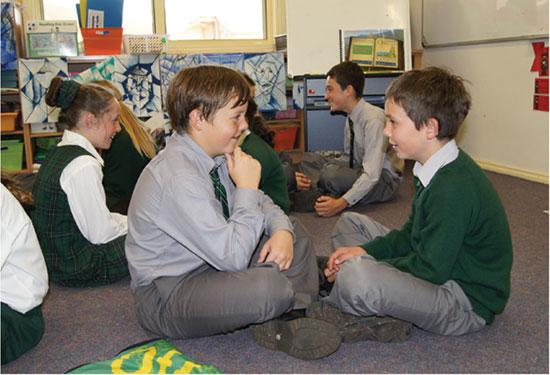
Figure 2: The teacher ‘vacates the floor’ when students are given control of the talk when they discuss in pairs
Example 8
| Teacher: |
Right, today we are going to be learning a bit more about how writers make their writing more expressive. So let’s do some thinking together before we make a list to guide us as we write. Turn to talk to our elbow partner and come up with three or four key things that you know that writers do to make their writing interesting, expressive. (Students turn to face another student, knees facing towards each other, talking in pairs; 2 minutes [See Figure 2]). Okay turn back this way, quickly. Aiden, what points did you both discuss? |
| Aiden: |
Use interesting verbs so you can really imagine it better
|
| Tyler: |
Expressive verbs
|
| Jemma: |
They try to make a movie in your head. |
| Aiden |
So you can see the action in your mind; it’s a clear picture, yeah like a movie. |
Giving learning-focused responses
This talk move invites students to ‘hear back’ and ‘build the dialogue’.
Providing learning-focused feedback is used when the teacher wants to clarify and extend what the student means or to reconstruct how the student came to a particular response.
To do this teachers reflect student responses back (through revoicing or repeating) with the aim of constructing a learning-focused and nonjudgemental response. Responses are focused on:
- deepening student thinking about the topic
- building the dialogue
- repairing ‘reasoning trouble’ (clarifying and teasing out confusions).
Dealing with wrong answers, confusions, misconceptions or half-formed ideas are treated as important opportunities to learn more (see Example 9).
Example 9
| Teacher: |
So Ryan you’re suggesting logging the rainforest ruins the habitat or the natural environment that is necessary to sustain the existence of particular species. You gave the example of Orangutans in Indonesia; that was a good piece of evidence that supported your point. Absolutely.
|